

“We live in dark times, very dark,” a friend of mine lamented on a recent call. I saw her point but also disagreed for three reasons. Our days are not ones for despair but understanding and hope. We live in an intense transitional time, and it is not the first time humanity has undergone times that feel apocalyptic and very threatening. These days will not be our last, nor the last dark ones.
First, history shows that there have been other dark times. The fourteenth century is one. My wife, kids, and friends are groaning now as I once again point to that cataclysmic age, but it was another time of dramatic change. That century began with ecological disasters. Crops failed and failed across Europe (1315-1317). The Hundred Year’s war (1337-1453) ravaged most of France and what is now Belgium and the Netherlands. The bubonic plague beset all of Europe, starting in 1348, and left many villages deserted and cities overwhelmed by the dead from every part of society. Peasants revolted in 1381, and the Church began a slow change that eventually burst with Martin Luther’s hammering and nailing 95 theses on a door.
We can see other times, too. The first and second Great Awakenings preceded societal upheaval in the US. The first led to the American Revolution and the second to the Civil War. The blind optimism of the 1920s gave way to the Great Depression, and the Sixties ended Jim Crow and solidified the civil rights movement. Each of these great changes was preceded by times of social antagonism, enmity, or hubris that gave way to dark days filled with pain and strife.
The second reason is the Internet. The access to immediate information and the corporations that spend billions on influencing people are deeply problematic. These nations, companies, and their leaders have found ways to jerk us around by using social media. They attempt to manipulate our emotions to click, click, click. The result is that many of us suffer from overstimulation, poor sleep, bad moods, quick tempers, anxiety, and depression.

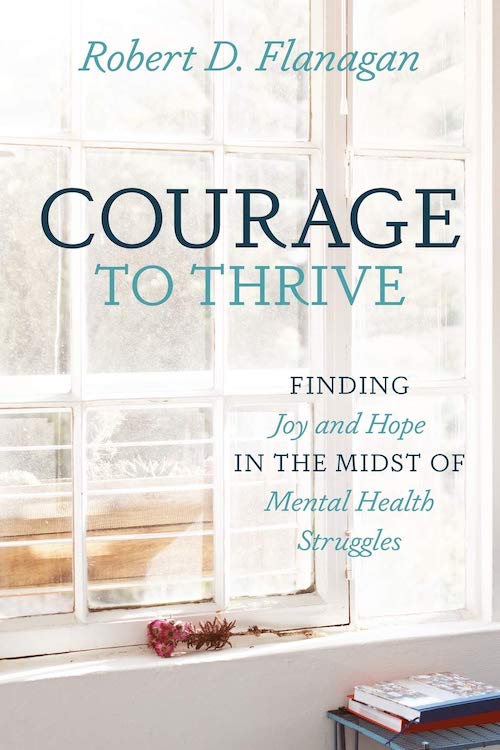
“Courage to Thrive,” by Rev. Dr. Robert Flanagan
However, the Internet has spotlighted corruption, greed, avarice, and evil that many of our leaders have quietly but purposely pursued. The Internet’s light shining on the darkness and evil of the world’s elite is a good thing—unsettling and disturbing—but a necessary good. We have all begun to see that the US is not the good guy in many instances, nor are many of the narratives proudly declared by influential politicians and other leaders.
Many US leaders have led the nation into unnecessary and pointless wars and military actions based on the supposed good of spreading democracy and protecting the homeland. In truth, neither was the sole fundamental reason. Padding the wallets of large corporations that benefit from such actions has been equally crucial. One may argue that expanding the US’s influence through military and corporate means is a national good, but the costs have been extremely high. So, we can thank the internet sleuths and independent writers for highlighting the elite’s wrongs and questioning the decisions that have cost us so many lives and other resources.
The third reason arises from the growing signs that something new is emerging. The fourteenth century was the high point of chivalry, which lauded blood thirsty men who roamed countrysides destroying the land and ruining people. They may have had shiny armor, but it was too often blood-soaked. That century’s governance was a chivalric, feudal monarchy that declined significantly after the population collapsed due to plague deaths. The Peasant’s Revolt forced landowners to pay peasants higher wages. Fewer laborers meant higher wages. These signs heralded a larger and more influential middle class, and the rise of democratic republics.
The other examples all point to signs emerging. The US religious awakenings caused major governmental changes. Out-of-control stock manipulation was a sign that Wall Street needed banking oversight and protection for depositors. Post-WWII racial strife pointed to a growing, albeit rough and difficult, integration of blacks and whites. The ensuing movements and legislation supported the necessary changes emerging across the country.
 What are today’s signs? I’m no Nostradamus, but I see historical ties to the past. Like the fourteenth century, we have been in constant military conflict. We are still fighting the War on Terror after twenty-years in Afghanistan, Iraq, and Syria. The current troop and ship buildup near Iran shows the US’s penchant for fighting has not ceased. We heroize elite soldiers. In the fourteenth century, knights were elite fighters known throughout kingdoms. The Black Prince was one such elite soldier whose tomb rests in a prominent spot at Canterbury Cathedral. Today’s equivalents are the special forces like Delta and the SEAL teams, whose heroics have become much-watched movies.
Other signs result from the COVID-19 Pandemic. The demand for increased wages, stubborn inflation, and resistance to in-person work are signs of change. Wall Street’s continued dominance over politics and the economy points to an imbalance between those living in the heartland and those in wealthy enclaves. Social and cultural changes have emerged across the country. These ominous signs signal an emerging change for the US and perhaps the world. And then there are the Epstein Files, which have highlighted horrible, repulsive acts committed by elites who should have known better and been better.
Despite the darkness of our times, I am optimistic and hopeful. Past events show that the world and the US were strengthened by these epochal changes. The fourteenth century gave rise to the Reformation and the Enlightenment. The Great Awakenings birthed the US and ended slavery in the US. The Sixties’ social movement, though not fully realized, led to unprecedented integration shaping the US anew. We cannot be certain exactly what kind of society, nation, and world will emerge from our dark days, but they will be better days, a better country, and a better world. I am convinced of that. So, I am hopeful.